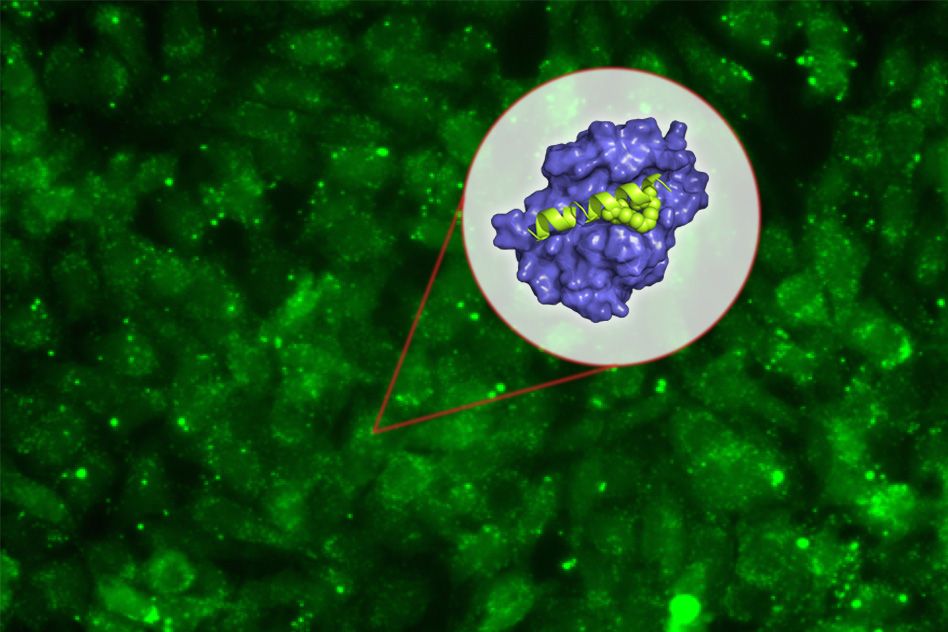
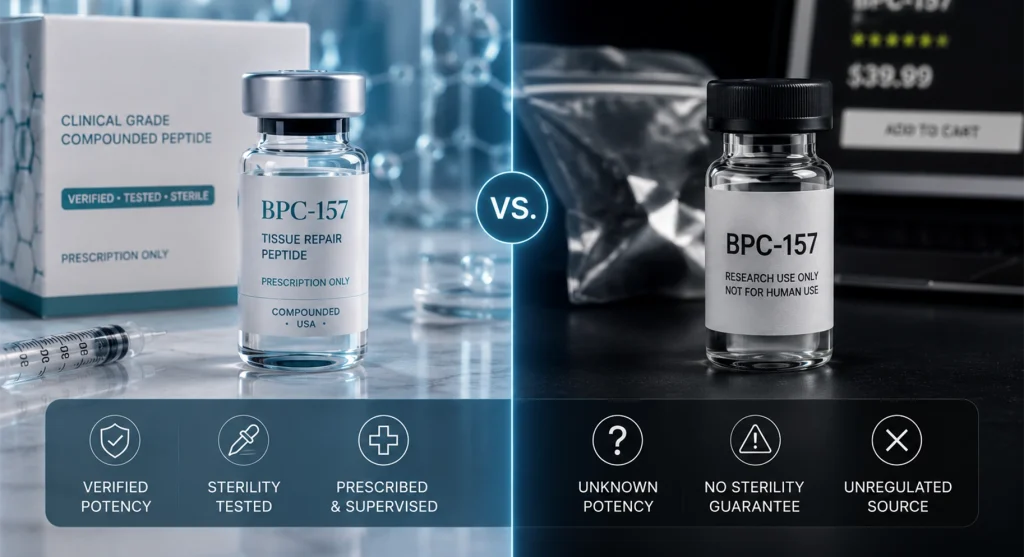
Proposed Mechanism BPC-157 appears to work through multiple pathways: Maintaining vesicular integrity (affecting VMATs and dopamine transporters) Possibly occupying its own vesicular storage sites Competing for dopamine receptor binding Functionally substituting when dopaminergic neurons are lost This last property, essentially filling in for missing dopamine function, would explain why the peptide counteracts both receptor agonists (apomorphine) and antagonists (haloperidol, fluphenazine, clozapine, sulpiride) with equal effectiveness
[DOI] [PubMed] [Google Scholar] 47.Roth JD, Roland BL, Cole RL, et al
After blocking in 5% skimmed milk powder for 2 hours at room temperature, the samples were incubated overnight at 4C with primary antibodies, including ERK1/2 (#9102), p-ERK1/2 (#9101), JNK1/2 (#9252), p-JNK (#9251), p38 MAPK (#9212), and p-p38 MAPK (#9211), which were obtained from Cell Signaling Technology (Beverly, MA, USA), as well as VEGF-a (sc-7269) and Tubulin (sc-8035), which were obtained from Santa Cruz Biotechnology (Santa Cruz, CA, USA)
Systemic injection into abdominal fat allows the peptide to distribute throughout the body and naturally migrate toward damaged areas